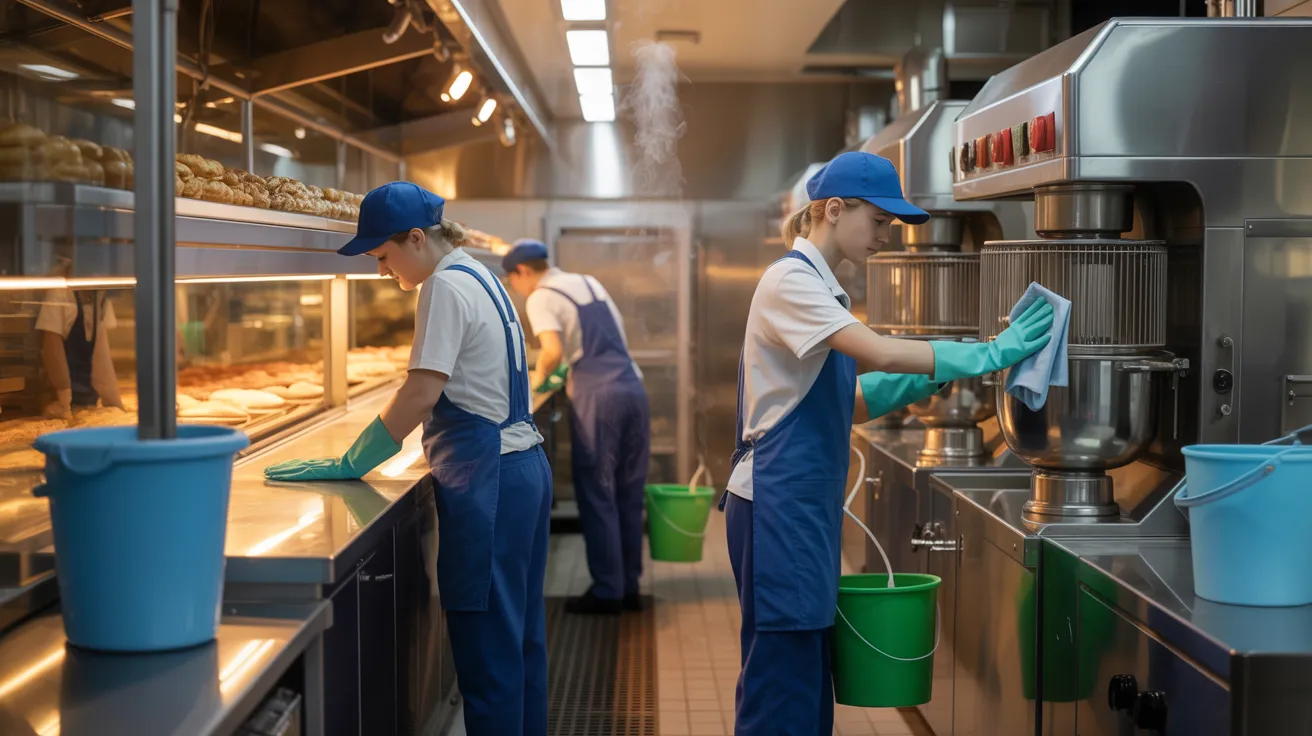
Professional food safety experts located in Brampton help maintain food service establishments, commissaries, bakeries, warehouses, and food service vehicles in compliance. They treat frequently handled areas, food prep surfaces, equipment, floors, drains, restrooms, and preparation zones with certified chemicals, in correct dilution, and using documented contact periods.
Important Highlights
- Food safety cleaning specialists from Brampton work with restaurants, grocery departments, commissaries, warehouses, bakeries, schools, mobile vendors, and allergen-sensitive operations.
- They disinfect high-touch surfaces, food-contact equipment, kitchens, floors, drains, restrooms, and storage areas using sectional methods to reduce cross-contamination.
- Verification of proper chemical concentration, appropriateness, and exposure duration is completed by trained specialists, with completion logged using samples, inspections, and correction logs.
- Proper sanitation schedules factor in threat, production volume, transitions, spills, and regulations when designating everyday, recurring, and cyclical activities by section.
- Choose vendors with hazard analysis knowledge, health regulatory, competency, WHMIS, training, liability, references, color-categorized instruments, and compliance-ready cleaning records.
Food Safety Cleaning Requirements for Brampton Operations
Food safety cleaning is essential for any Brampton facility that deals with, keeps, prepares, packages, or provides food. Apply it to your facility if it is subject to public health review, food regulations, or HACCP protocols. This includes dining establishments, break rooms, distribution centers, market departments, meat shops, fish areas, stores, and food prep kitchens.
You'll equally need documented food sanitation in storage centers, processing facilities, refrigerated warehouses, bakery retailers, school nutrition programs, event halls, and delivery centers. Portable business models are included, examples being food trucks, festival vendors, and pop-up establishments. When your staff work with ingredients, section ready-to-serve foods, heat meals, or keep allergens stored, your location requires recorded sanitation procedures. In Brampton, cleanliness is required; it forms statutory, functional, and public health compliance.
What Do Brampton Cleaning Experts Clean?
Professional cleaning services specializing in Brampton sanitize touched surfaces, food preparation areas, floors, and sanitary facilities in compliance with food safety regulations. Focus on these locations occurs because they pose maximum contamination danger, injury hazards, and compliance issues.
If you comprehend their cleaning services, you'll successfully ensure your facility meets all operational and regulatory compliance needs.
Addressing High-Touch Surface Sanitizing
Brampton cleaning experts focus on high-touch surface sterilization because these frequently handled surfaces can transmit microbes and organic matter throughout a location. You should establish a documented schedule for sterilizing entry points, contact surfaces, control panels, railings, shared devices, registers, and cold storage handles. Implementing surface identification mapping, teams identify every high-traffic zone and set cleaning schedule
confirm adequate disinfection
Food Prep Areas, Flooring, and Sanitary Facilities
Brampton cleaning services focus on kitchens, floors, and restrooms as each zone presents distinct food safety, slip-and-fall, and public health concerns. In industrial kitchens, you need degreasing on cook lines, equipment exteriors, drains, prep surfaces, and splash zones to reduce contamination and pest pressure.
Floor care that is documented should also be anticipated. Technicians clean and remove buildup from tile grout, ceramic surfaces, and vinyl floors, then apply appropriate drying controls so you can reduce slip incidents and maintain code-compliant conditions. They also address entry points where dampness and dirt enter the building.
For restroom sanitation, cleaners sanitize touchpoints, fixtures, partitions, dispensers, and waste containers, then replace products and reduce odor. They also service restaurant moprooms, where chemical storage, sink hygiene, and drainage conditions can affect sanitation compliance and staff safety daily.
Why Food Safety Cleaning Matters in Brampton
Brampton businesses need to establish proper sanitation practices for meeting legal standards and obtaining approval. You also minimize cross-contamination by cleaning and sanitizing food-contact surfaces, equipment, and high-touch areas correctly. Most importantly, you safeguard public health by lowering the risk of foodborne illness in your facility.
Health Code Compliance
Food businesses in Brampton face mandatory safety protocols, making food safety cleaning vital to meeting health code requirements, defending patrons, and sidestepping enforcement action. You must maintain clean food preparation areas, documented cleaning schedules, safe chemical management, and auditable operational standards that comply with municipal and provincial inspection expectations.
Inspectors review your operation to establish that your cleaning program maintains safe storage, machinery hygiene, trash control, and bathroom upkeep.
Cross-Contamination Prevention
Adhering to regulatory guidelines requires your expertise in stopping cross-contamination throughout daily food handling and cleaning. You need to separate raw ingredients from ready-to-eat foods, sanitize work stations after each task, and store cleaning supplies separately from food. Structured procedures reduce transfer risks and maintain ongoing regulatory adherence.
Implementing allergen segregation helps keep priority allergens from contacting shared surfaces, containers, or equipment. Utilize separate boards, color-labeled items, and clear tool marking so workers don't combine products during preparation or service. Enforce hand hygiene following raw meat, seafood, eggs, or allergen-containing products. Replace wiping cloths regularly, and verify sanitizer strength with test strips. When you train staff to follow these controls per shift, you create a cleaner, safer operation that satisfies Brampton's food safety needs daily.
Public Health Safeguarding
If proper sanitation deteriorates, you don't merely face potential inspection issues—you boost the probability of pathogenic contamination affecting customers, staff, and the broader Brampton region. You also weaken your role in safeguarding community wellness, especially in high-traffic food premises where pathogens travel quickly through surfaces, equipment, and touchpoints.
You must establish sanitation protocols that remove contaminants, disinfect correctly, and confirm effectiveness. This involves adhering to contact periods, employing authorized sanitizers, documenting procedures, and training employees to meet regulatory standards. These controls promote disease prevention by decreasing microbes before reaching food or hands. Across Brampton, effective sanitation safeguards vulnerable groups, reduces disease potential, and demonstrates accountability. When you maintain proper protocols, you go beyond requirements—you meaningfully reduce risk and enable safer food service throughout the area.
In What Ways Does Cleaning Help Achieve Food Safety Compliance?
Strict sanitation practices strengthen food safety compliance by decreasing contamination threats, preventing pathogen multiplication, and keeping your facility aligned with sanitation requirements under HACCP-based programs and public health regulations. You ensure that food-contact surfaces are visibly clean and microbiologically controlled, backing documented preventive controls and inspection readiness.
Cleaning strategies additionally bolster allergen mitigation by eliminating residues that can trigger undeclared allergen exposure.
When Ought You Plan Commercial Cleaning?
daily routine cleaning
Treating regular tasks independently ensures better organization.
Finding Quality Brampton Cleaning Experts: A Guide
Begin by evaluating providers based on food-safe sanitation requirements—not solely on budget. You should confirm that each organization comprehends CFIA, public health, and HACCP-aligned expectations applicable to your facility. Request insurance certificates, WHMIS compliance, staff training documentation, and oversight procedures. Assess whether technicians recognize cross-contamination hazards, chemical handling protocols, and verifiable sanitation records.
You should further examine service consistency and accountability. Request references from food facilities in Brampton, then review response times, corrective action plans, and communication standards. Validate the company facilitates supplier audits and can read here present inspection-ready documentation to regulators or third parties. Confirm equipment is maintained, color-coded implements are used appropriately, and site-specific hazards are identified. A experienced service ensures regulatory compliance, product integrity, and your brand reputation.
What does a cleaning and sanitation plan encompass?
Create a documented strategy that defines every sanitation task, standard, and responsibility prior to beginning production. You should list cleaning schedules, authorized products, mixing ratios, exposure periods, equipment, and testing procedures for each zone, surface, and piece of equipment. Be sure to include pre-operational inspections, corrective actions, and employee training requirements.
Your plan should also cover cross-contamination prevention, waste disposal, pest management measures, and scheduled documentation for restrooms, drains, floors, and food-contact areas. Specify how you'll separate raw and ready-to-eat processes, support ingredient tracking, and maintain accurate allergen labeling through validated cleaning between product changes. You should establish accountability, maintain signed records, and check results against regulatory standards, HACCP controls, and customer requirements. When gaps appear, revise procedures immediately and re-educate staff.
Commonly Requested Questions
Are sanitation providers available for nighttime operations in Brampton properties?
If you manage controlled environments, you'll also need documentation that support audits and ensure compliance.
Do Brampton cleaning experts provide emergency spill response services?
Yes, you can find many Brampton cleaning professionals offering spill containment options. They manage hazardous materials, assess dangers, isolate zones, and perform swift decontamination to minimize risk and limit operational impact. You should confirm timeframes, training credentials, safety measures, and procedures. If your facility must meet standards, choose a service that documents incidents, follows procedures, and supports audits.
Will eco-friendly disinfectants clean safely food preparation areas?
Definitely, green disinfectants work safely on food-contact surfaces if you purchase disinfectants approved for food contact that adhere to regulatory standards. You should check application timing, dilution rates, and rinsing needs ahead of deployment. Plant-derived products minimize harsh chemical exposure, but you should obtain demonstration of efficacy against relevant pathogens. To maintain residue-free conditions, adhere to precise manufacturer instructions and confirm your cleaning agent adheres to food industry regulations.
Can cleaning schedules be adjusted for production fluctuations?
Without question, sanitation programs adjust easily for seasonal production changes. Adapt frequencies, staffing, sanitizers, and validation steps to match seasonal patterns while upholding compliance standards. Decrease equipment downtime by planning cleaning during changeovers, peak volumes, and usage patterns. Additionally update SSOPs, staff education, and environmental testing to account for periodic risks, new allergens, or increased soiling. Periodic assessments keep your schedule current.
Do professional cleaners instruct your team in sanitation best practices?
Certainly, professional cleaning experts coach your employees on hygiene protocols. You obtain staff training on proper chemical use, processing times, cross-contamination prevention, equipment disassembly, and documentation procedures. They typically align coaching with HACCP, GMP, and CFIA or local public health standards. Many execute sanitation audits to verify compliance, uncover shortcomings, and reinforce corrective actions. This helps you maintain consistent procedures, satisfy audits, and reduce food safety risks every day.
Final Thoughts
Partnering with Brampton commercial cleaning and food safety experts means more than cleaning—it ensures your facility stays inspection-compliant and your protocols remain compliant. From processing facilities to kitchens, each sanitized surface and maintained corner reduces health hazards and prevents major expenses. By arranging service at suitable frequencies and executing a comprehensive cleaning strategy, you shield your workforce, clients, and your reputation. In a heavily regulated sector, clean environments can't be overlooked—they're critical to business success.